
Bathroom walls
Bathroom Wall Panels vs Tiles
Compare how panels and tiles look, how you clean them and what each needs beneath the surface.
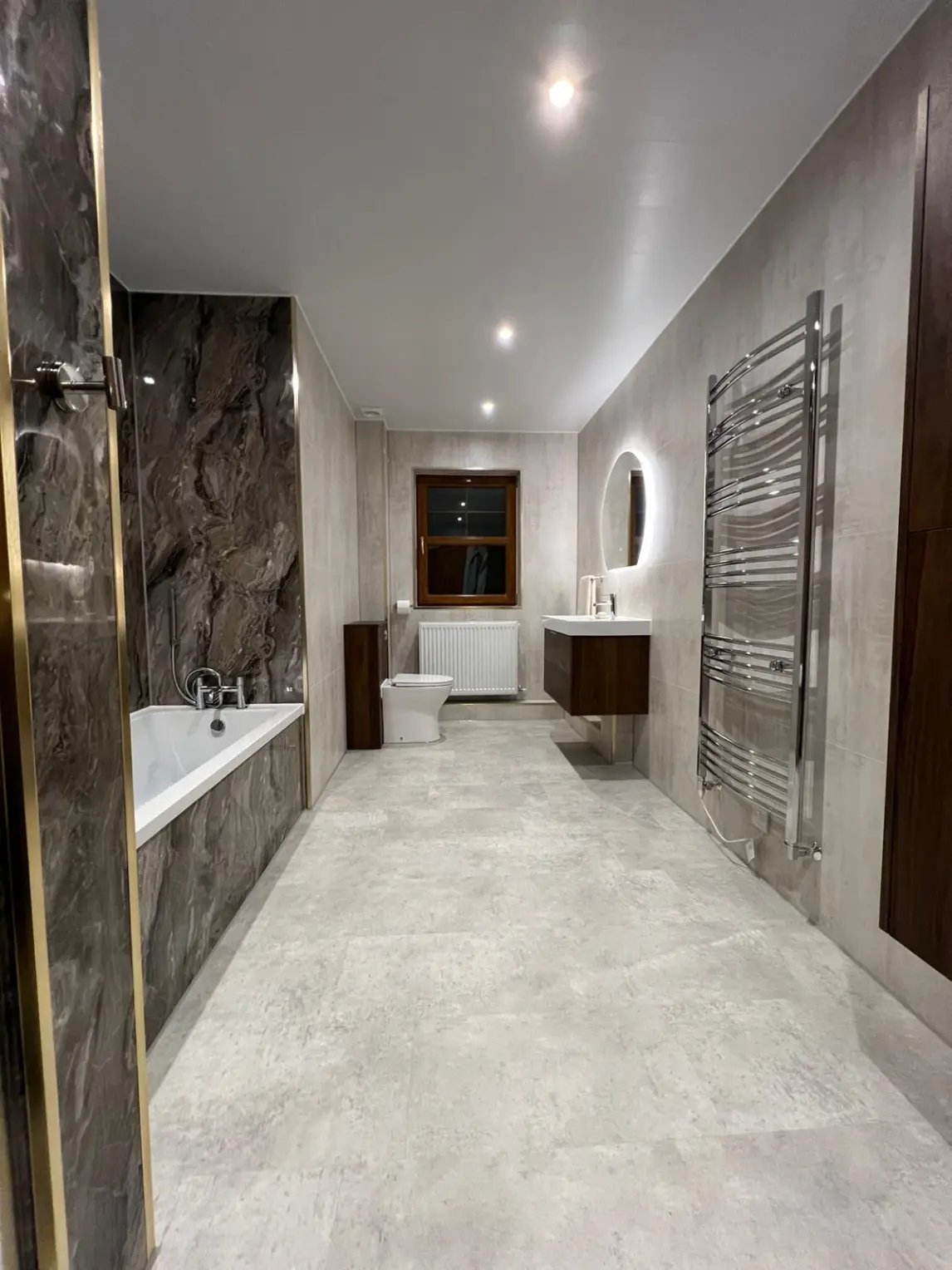
Quick answer
Panels usually have fewer joints to clean. Tiles offer more choice of sizes and patterns. Both need suitable wall preparation and correctly finished edges, so compare complete fitted quotes before choosing.
See 112 real bathroom photos in the gallery → Explore finished projects →
Choose the Look of Your Bathroom Walls
Wall panels cover a large area with fewer joins. Depending on the range, you can choose plain colours, marble effects, stone effects or textured surfaces. Look at a full panel or a large sample where possible. A small sample may not show the scale of a marble pattern or where it repeats across the wall.
Tiles let you choose individual sizes, shapes and layouts. A plain rectangular tile looks different laid in rows, vertically or in a herringbone pattern. Grout colour changes the result too: a close colour makes the lines less noticeable, while a contrasting colour draws attention to the pattern. Ask to see the tile and grout together before ordering.
Bring samples beside your chosen furniture and flooring. Check them in daylight and under the lighting planned for the bathroom. A finish that looks warm in a showroom may look cooler at home. You do not need every surface to match, but seeing the colours together helps avoid a surprise once everything is fitted.
Compare Cleaning and Everyday Care
Panels usually have fewer joints than a tiled wall, which can make routine wiping easier. They still have edges, corners and seals that need care. Follow the cleaning instructions for the particular product. An abrasive pad or unsuitable cleaner can damage a finish even when the surface looks hard and durable.
Tiles also vary. A smooth glazed tile can be easier to wipe than a heavily textured surface. Grout needs its own care, and natural stone may need treatments that a ceramic tile does not. Ask which cleaners are suitable and whether any regular sealing is required for the products you choose.
Keep an eye on the seal around the bath or shower whichever finish you choose. Report gaps, loose edges or persistent damp patches so the cause can be checked. Neither panels nor tiles remove the need for ventilation, cleaning and maintaining seals. Choose a finish you like and can realistically look after.
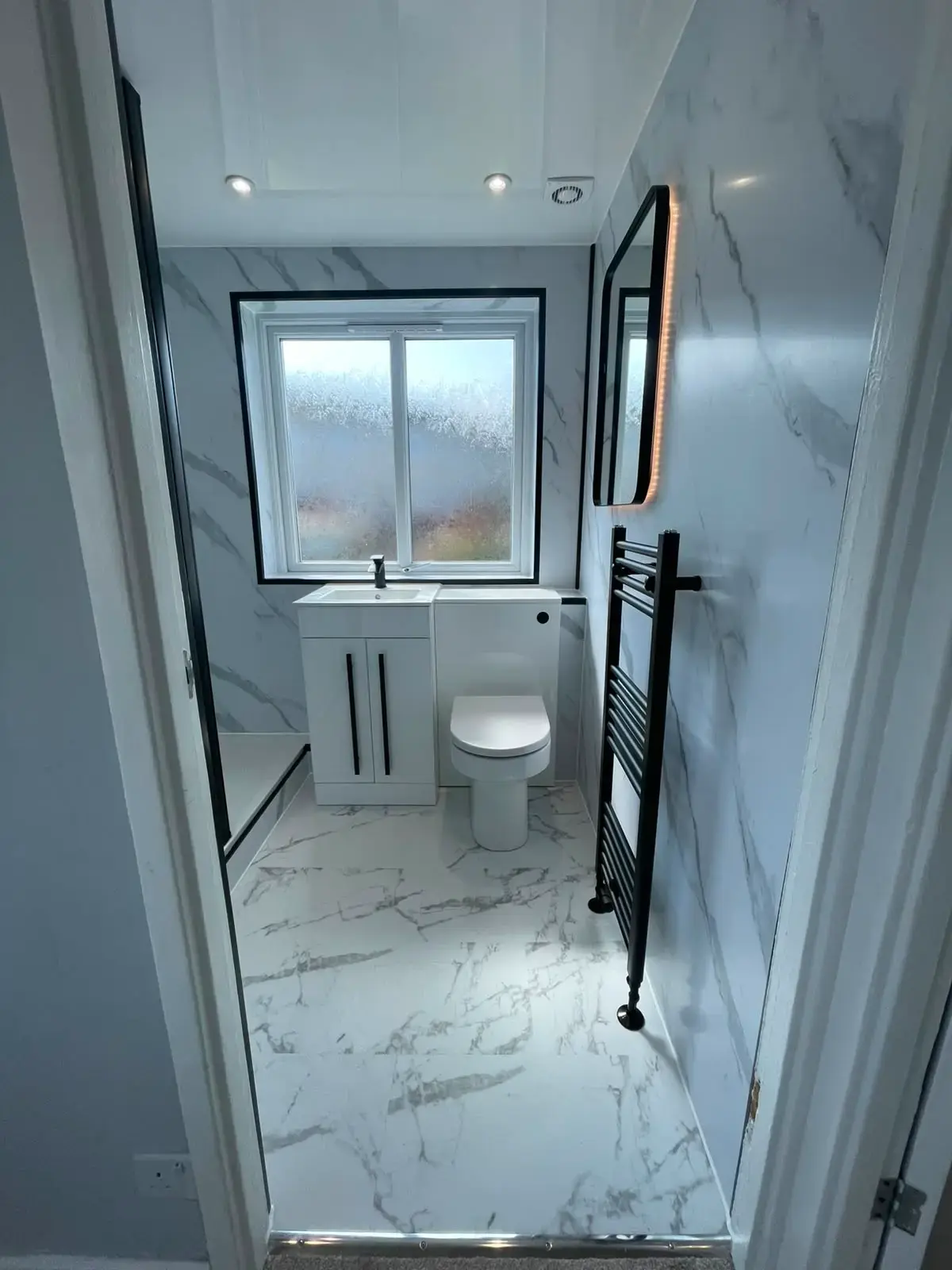
Check the Walls Before Choosing a Finish
The new finish needs a suitable wall behind it. Loose tiles, damp plaster or an uneven surface may need attention first. The survey and quote should explain what preparation is included and what happens if further damage is found after the old finish is removed. Covering a problem does not repair its cause.
Some panel systems can be fitted over existing tiles when the surface meets the manufacturer’s requirements. That does not mean every tiled wall is suitable. Its condition, flatness and fixing strength need checking, along with the effect of the extra thickness around windows, fittings and corners. Follow the selected system’s instructions.
In a shower area, the complete system matters: the wall surface, waterproofing where required, adhesive, joints, corners and openings around pipes. Tiles and grout alone do not replace suitable waterproofing beneath them. Ask how the installer will prepare and finish the wet areas, rather than judging protection by the visible surface alone.
Want your exact price?
Book a free design visit at home or in our Kilmarnock or Braehead showroom, and get a written, no-obligation quote. We usually reply within about an hour, 7 days a week.
Book a free design visit See real bathroom photos →Compare the Complete Fitted Price
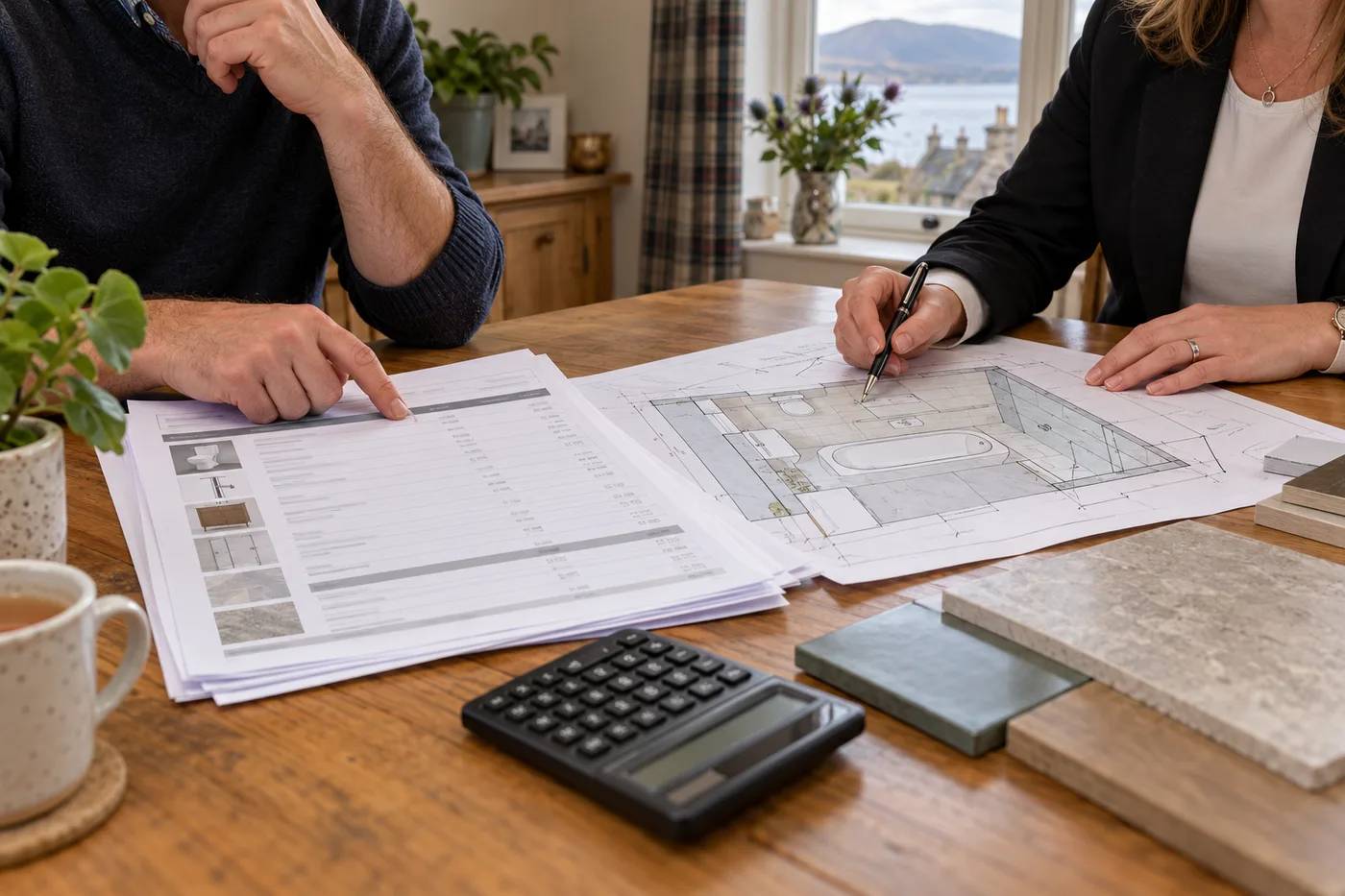
The price on a panel or box of tiles is only part of the bill. Include removal of the old surface, disposal, wall repairs, preparation and fitting. Panels may need particular trims, adhesives and sealants. Tiles need suitable adhesive, grout and finished edges. Compare quotes for the same walls and the same preparation.
The room shape also affects the work. Windows, corners, pipe openings and built-in shelves all need careful cutting and finishing. A complicated tile pattern can require more fitting time and offcuts. Panel sizes and pattern positions affect how many sheets are needed. Ask how these details have been allowed for in the quote.
Do not assume that one finish is always cheaper. Product ranges vary widely, as does the work needed in each bathroom. If the total is above your budget, ask which choices could change without leaving out essential preparation. A simpler pattern or a different product range may help more than comparing headline material prices.
Think About Repairs and Future Changes
Keep the product name, colour and fitting information with your bathroom paperwork. Matching a finish years later can be difficult if a range changes. Ask whether keeping spare tiles or useful panel offcuts makes sense, and store them safely. A matching spare is helpful, but it does not guarantee that a repair will be simple.
Replacing an individual tile may be possible if it can be removed without damaging the surrounding installation. Replacing a panel can involve nearby trims, seals or fittings. Before adding a mirror, shelf or shower accessory later, check how it should be fixed and sealed. The wall finish alone may not provide enough support for a heavy fitting.
See Panels and Tiles Before You Decide
At our Kilmarnock or Braehead showroom, compare the surface texture, edges and joins as well as the colour. Bring photographs and measurements of your bathroom, including any awkward corners or window recesses. A designer can help you compare finishes that suit the room and explain the fitting work included in your quotation.
Our fitted bathroom service brings the design, products and fitting together under one team. Book a free design visit and we'll measure your room and send a written, itemised quote. See the bathroom cost guide, finance calculator and areas we cover.